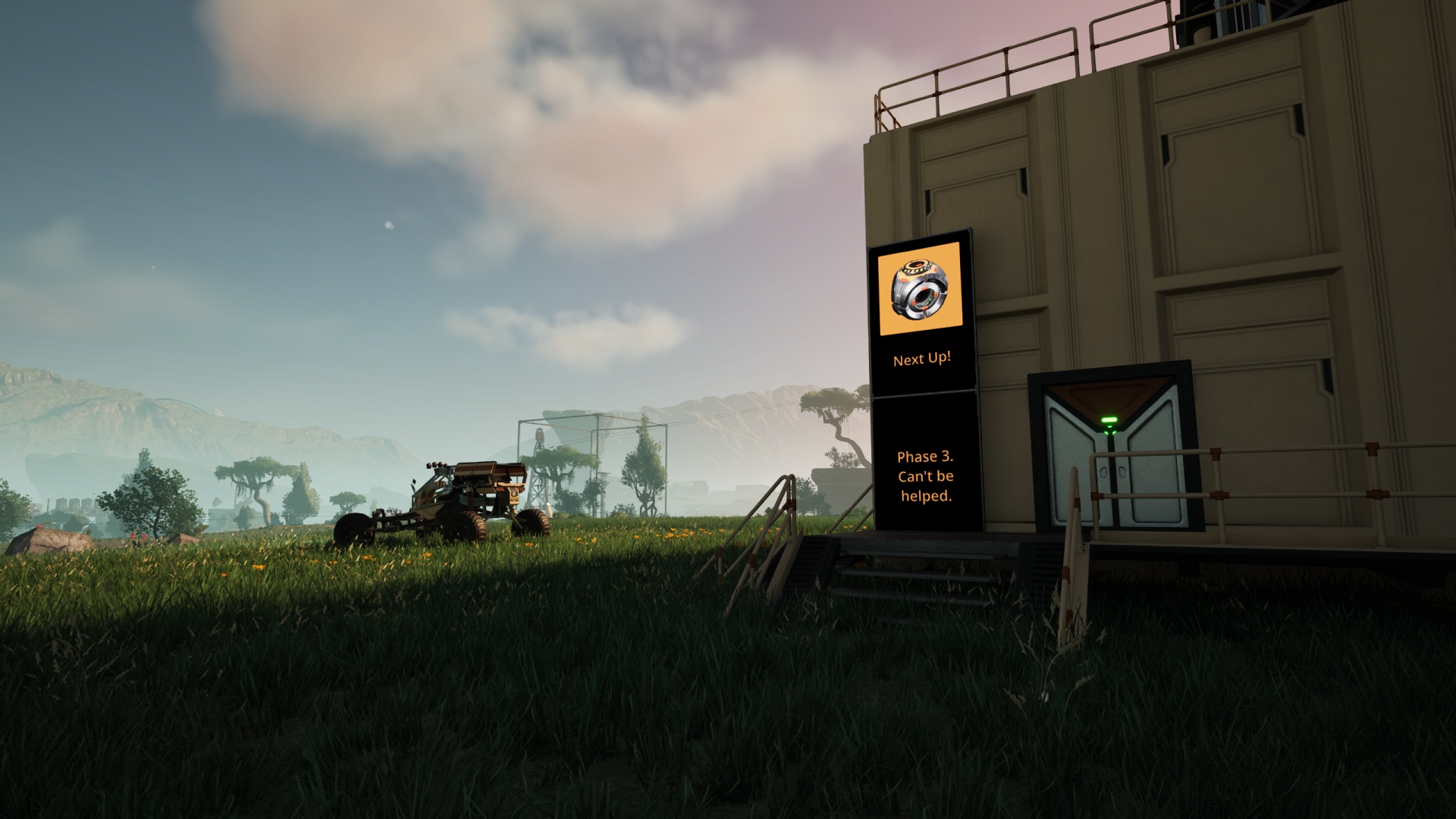

Remember last week, when I was in the process of rebuilding one of my Rocket Fuel generator arrays with a new blueprint-based system?
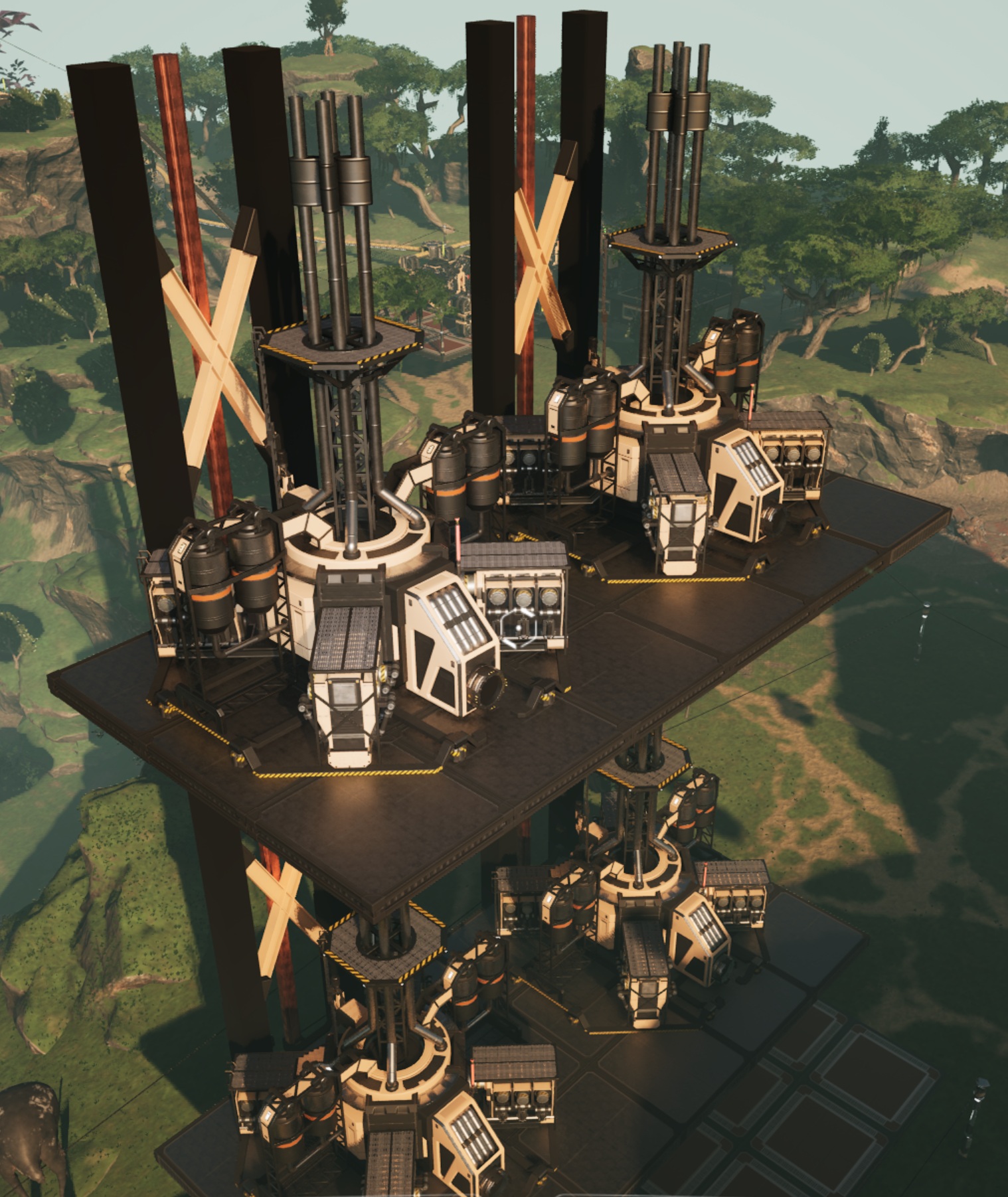
Now that it’s complete, I’ve… improved the blueprint. Hey: It’ll be helpful at some point! (Possibly not until I start a new save, though.)
The core goal of the blueprint is to facilitate building paired rows of fuel generators facing one another to receive fuel from a pipe junction with easy-to-connect power leads, with the bonus ability to stack these generator rows vertically. And the “Mk1b” version as seen in last week’s post does the job moderately well. (“Mk1” and “Mk1a” had showstopping issues so they never saw live use.) I needed to address a couple of annoying fiddly bits, though, so this weekend I made some improvements.
I kept the core elements: Two pillars on what will become the outer edge of the overall structure with crossed metal beams as a visual representation of support and stability, a couple of beams underneath for the illusion of providing support for the foundations on which the generator sits, and the fuel generator itself with a power pole embedded, that itself is linked to a power plug directly underneath for easier connectivity.
First problem: The blueprint was made mostly of steel. The foundations are of the “grip metal” style which uses steel beams instead of iron plates. (I… don’t like the stock foundation design.) The pillars were steel. I was going through a couple hundred steel beams with every blueprint placed… and it can take 100 or so blueprint instances to complete a power plant! Solution: The support pillars are now concrete. Painted in the “none more black” style, because that just never stops looking cool. It’s more of a cost shift rather than a cost reduction but refilling my “depotspace” reserves of both concrete and steel beams goes much faster than waiting for just steel beams to recover from a more severe depletion.
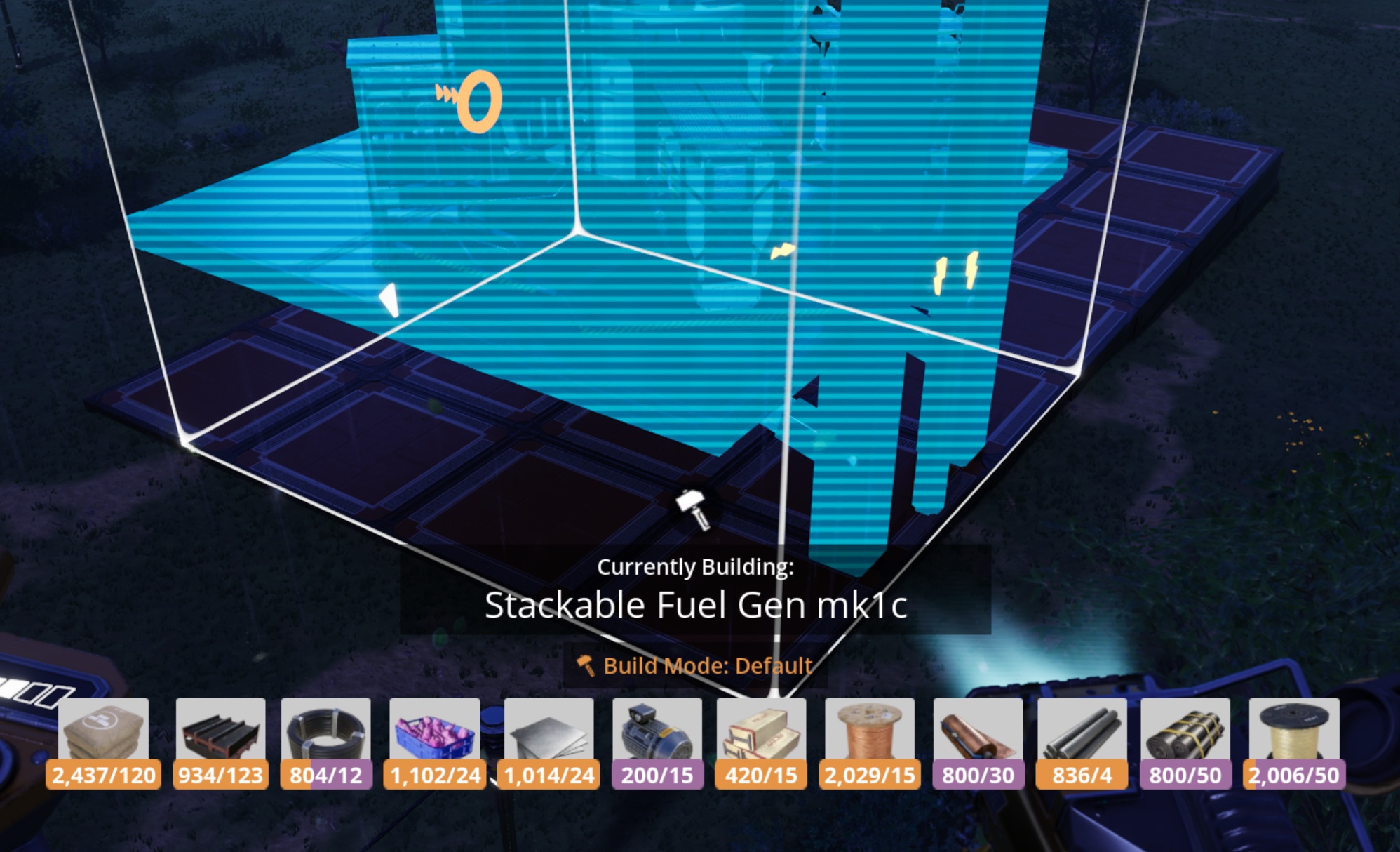
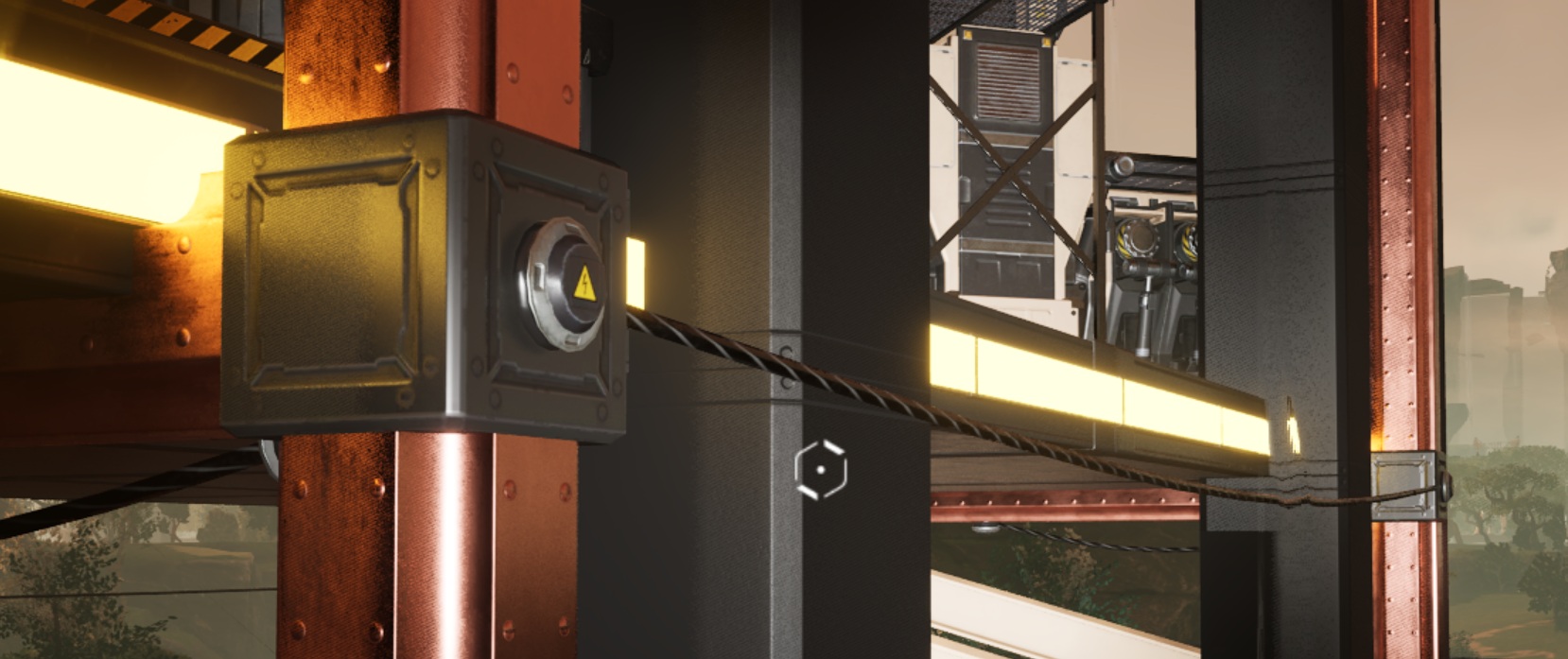
Second problem: The blueprint lacked a built-in means of running power vertically to reach the next set of stacked blueprints. Solution: I redesigned the part of the underfloor where the power lead beneath the generator went to the “outer edge” of the platform so that it connects to a new element, a vertical beam (painted “copper”) running the same distance as the pillars above and below the foundation platform. By connecting two power plugs, one facing “inward” and one “outward,” I have a moderately easy way to connect one floor’s power to the next. Since this will only be an issue a few times per build it doesn’t need to be too easy or too obvious.
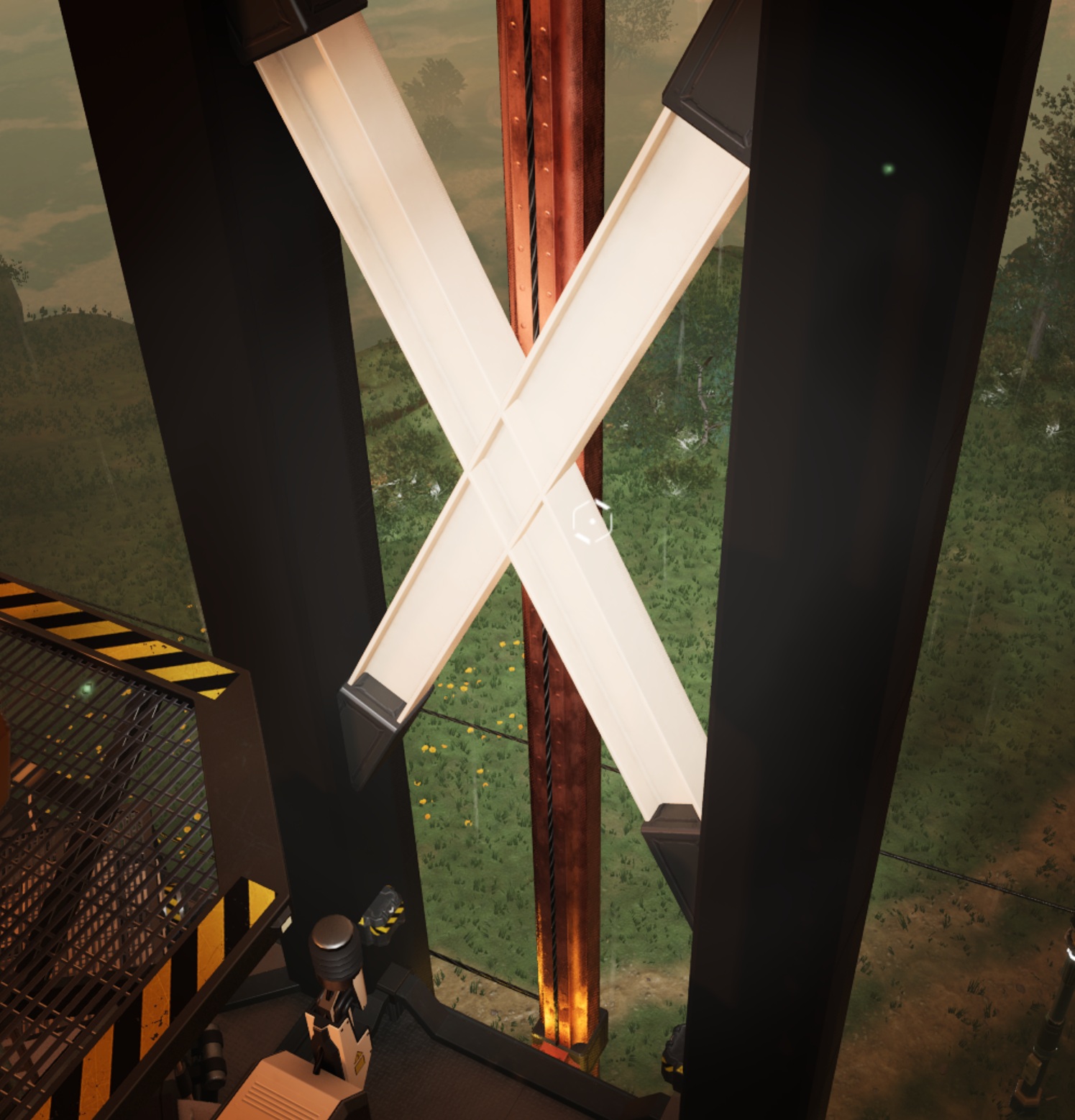
As a bonus, this redesign means that the outer plug’s position prevents clipping with the support pillars as the lateral power connections are made.
You can see a mockup deployment of the finished product at the top of this post. I’m rather pleased! If anyone wants a copy of the blueprint file to play with just let me know.
I suppose by next week I should actually make progress on the game’s primary goal of saving humanity (and puppies and kittens). We’ll see.
Leave a Reply