Against what might be called my “better judgement,” had I any to speak of, I decided to try out one of Right Stuf’s monthly loot box “Anime Haul” deals. They had my number this time, the theme being Music. (It was a rough week; I decided retail therapy was as good as any other kind.)
The box arrived yesterday. One Hatsune Miku manga (as yet unread), one soundtrack CD (Kamichu, and it’s… okay? generic orchestral ST stuff), one Blu-Ray (Sora no Woto / Sound of the Sky, which I remember liking a lot and look forward to a rewatch), a mug (tie-in for Your Lie In April, which I’ve never watched), and two cellphone charms, one of them is tiny and unrecognizable to me, and the other is… well:
Meet Nozomi Tojo, of the Love Live! franchise, apparently. Friend Wonderduck recommended one of the shows in the series recently, maybe this is a sign that I need to get on that.
I racked up a nice collection of gifts for friends as well. It’ll be nice to send gifts from places other than my usual daily commute, at least. Oh, and… I completed the special research tasks for A Mythical Discovery. All of them.
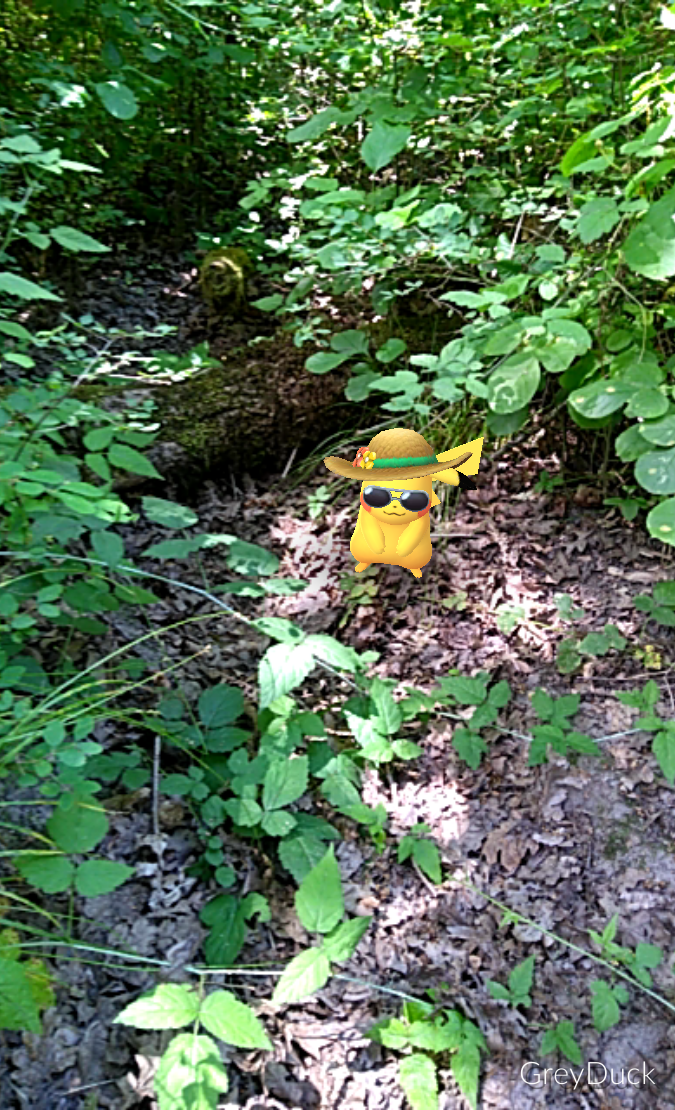
Yes, that means I have a Mew now. Boy howdy was catching that little twerp a pain in the backside. I didn’t know it was part Predator! It goes mostly-invisible (and you’re forced into AR mode) which makes for a helluva time when you’re out in bright sunshine.
Anyway. My day started kinda lousy, but walking it off (and playing mobile video games) helped turn it around. Huzzah.
I made some mistakes while selecting the album list. That’s fine, mistakes happen. Two of the mistakes boil down to, “but I’ve already written about this one!” Ha ha, too late, I made a big sampler mix late last year and everything. I’m committed.
Here’s the first of those mistakes. I’m standing by the selection because first time around, I was unkind to a perfectly cromulent record. This time, maybe, I can do justice to the thing.
What is it?
Astronaut is the late-2004 studio record released by Duran Duran, who were busy trying not to fall off the pop-culture radar entirely.
How does it sound?
Mix up for the sampler:
Why this pick?
It’s the last album by the band that I actually like. Duran Duran are very, very hit-or-miss for me, which is weird because their sound didn’t change much over the first couple decades. Rio and Notorious? Great! Seven and the Ragged Tiger and The Wedding Album (yes that’s not its real name but whatever, everyone calls it that)? Meh. Liberty and Red Carpet Massacre? No thank you. I couldn’t tell you why one record works and another doesn’t, not in this instance.
Astronaut is almost on the “meh” part of the spectrum, and upon first listen that was my overall impression. Now, though, I really love a half dozen of the songs and am okay with most of the rest. Only a couple of the tracks still put me off.
So here we are. It’s a good record. Don’t trust what 2004’s version of Karel had to say about it! (I’m not linking that post. You can search for it if you want.) He was kind of a self-absorbed jerk with delusions that his opinions mattered!
…Hmm. Maybe things haven’t changed terribly much, eh?
Which songs are the highlights?
“(Reach Up For The) Sunrise,” the lead single and first track on the album, is a fully competent radio-friendly piece of work and holds up just fine, fourteen years later.
The real standouts, though, show up once the first couple of songs are out of the way. “What Happens Tomorrow” is marvelous in the same way that “Come Undone” was on The Wedding Album, “Nice” may not be terribly deep but it is outstandingly upbeat, “Taste The Summer” is almost good enough to make me think fondly upon my least-favorite of the seasons, and “Finest Hour” is surprisingly uplifting.
Along the way we also get “Want You More” and the title track “Astronaut,” both solid bits of pop songcraft.
Which songs don’t work so well?
I still don’t like “Bedroom Toys” or “Still Breathing” very much. Some things didn’t change from 2004 to now, I suppose.
“One Of Those Days” needed an overhaul; there’s a germ of a good song in there somewhere that should’ve had the chance to come to fruition.
Which album did you almost pick in favor of this one?
Had I been thinking clearly enough I’d have remembered I’d written about Astronaut already. Twice. Okay, the second time it was only a couple of paragraphs, but the point stands. I goofed up.
My obvious choice should’ve been Notorious. I love that record to bits. There’s not a song on there that I can’t enjoy on some level. I will play it through and not skip a thing. It contains several of my all-time favorite DD tunes, such as “Skin Trade,” “Winter Marches On,” and “Proposition.”
Maybe, if I revisit this album-write-up idea later, I’ll rectify this egregious oversight.
Any final thoughts?
I received this album from the radio station outfit I used to work for. It was the big promotional package and everything. I gave it away to a friend (after ripping it to my library) because my first impression was so underwhelming.
I… kind of wish I hadn’t done that. D’oh.
The version of “(Reach Up For The) Sunrise” they released as a promo is a better mix than what’s on the album. So of course I don’t have a copy of that either! Go, me!
Oh, hey! We’re past the halfway mark on this year’s project. I haven’t missed a deadline in a year and a half so far. Let’s hear it for six more months of reliable content production!
Let’s put on a little play, in one act. To set the scene you need to know that my employers use a service called Backup Radar to track successes and failures across our suite of supported backup products. Backup Radar uses APIs to connect to some services and relies on emailed reports for others. CrashPlan is one of those others.
Until recently, CrashPlan has sent a daily summary report of successes and failures all in one message. Nice, simple, all in one place, easy to parse. Then they decided to change report formats…
Me, to CrashPlan Support: Hey, guys. I noticed the new report format. Looks snazzy, but could you re-enable reporting successful jobs? This is important to us.
CrashPlan Support: LOL No.
Me, to CPS: Do you have an API we could query instead?
CPS: Um what?
Me, to CPS: Any options at all to remedy this problem? It’s serious enough that we’re going to look at replacing your product in our offerings.
CPS: We only look forward, never back.
Me, to Backup Radar Support: Looks like CrashPlan have utterly crippled our ability to use their centralized daily summary report to track successful jobs. Got any suggestions?
Backup Radar Support: Here’s an article on how to configure the CrashPlan clients individually to send their daily reports, bypassing the useless centralized reporting situation.
Me: Well, okay. That’ll be tedious, but whatever works, thanks!
CrashPlan: Oh hey, we just updated the UI for all clients to remove the email reporting option. LOL!
Me: …sigh.
Hey, remember when CrashPlan didn’t suck? I used their services for years! I pushed for us to adopt them as the replacement for Ahsay!
For the record: This week I got rid of the Piwigo gallery in favor of just cramming galleries into the main site via plugin. Note the “Galleries” menu above. In case any Piwigo fans/devs read this? Vanity-searching your project name on Twitter just to tell a random person how wrong they are about the problems with your product is a great way to ensure that the random person in question will immediately dump your product. Just an eff why eye!
Also, I updated the My Sites linkage on the sidebar to reflect my gradual migration over to federated services (Mastodon and PixelFed instead of Twitter and Instagram).
The Blogroll (wow, what an ancient term) went away in favor of a shorter list of friends and other sites I want linked.
We now return you to your regularly scheduled weekend shenanigans.
Yes, I could’ve placed this self-titled release up against a couple of the others. I decided against that in favor of honoring the anniversary of its release.
What is it?
Toy Matinee is a one-off masterwork of pop music released this week, twenty-eight years ago. In its original form it’s only nine songs long, barely past three quarters of an hour.
How does it sound?
I hope that someone saves a seat for me on the sampler mix:
Why this pick?
For all that Kevin Gilbert’s talents are displayed quite well on his later solo records, I get the feeling that he was best suited to a collaborative effort. Which, of course, makes me sad for the might-have-been outcome if he’d auditioned for and gotten the Genesis gig after Phil Collins left, but… c’est la vie.
And what a collaborative effort this is! It’s catchy, it’s clever, it’s poignant, it’s everything you want from an early ’90s pop album. There’s hardly a dull thud to be heard.
(…sorry about that, Gilbert fans. That pun was unintentional.)
High school best friend Steve and I came across the band due to a little side blurb in an issue of Tower Records’ magazine at the time of the album’s release. The two main songwriters were quoted as having influences that added up to most of the core of our individual music libraries. We had to check this album out!
I’m so glad we happened upon that magazine article. Too bad I threw out the stack of magazines years ago…
Which songs are the highlights?
The lead track, one of only two songs to receive much in the way of radio airplay, is “Last Plane Out” and it’s a great advertisement for the record as a whole. “The Toy Matinee” is rather somber for a title track but that’s fine because it’s gorgeous anyway. Seriously, it’s a go-to rainy-day bit of mood music. If you sample the album online (beyond the above 30-second mix), please check out these two songs first and foremost.
And then there’s the song which is presumably about Madonna, “Queen of Misery,” which largely exists because nearly all of the band’s members worked on one of her records. (I didn’t know about that until years and years later.) All of this is firmly in the pop-rock vein, nothing more and nothing less. Still, it’s all superbly crafted stuff.
Along and between those standouts we get the appropriately absurd tribute to the painter Salvador Dali, “Turn It On Salvador,” and the almost anthemic “Remember My Name.” Closing out the original album tracklist there’s “We Always Come Home,” an odd but endearing slice of aw-shucks down-home life-goes-on.
Which songs don’t work so well?
Okay, “The Ballad of Jenny Ledge” is kinda meh. It’s not bad, it’s just not particularly memorable or compelling either. Kind of a foam packing peanut of a song, a state made worse by it being the longest of the songs on offer.
On the flipside, “There Was A Little Boy” is musically compelling and well-written, but the lyrical subject matter is a bit off-putting. “How can you expect a child to understand the sickness of the world / his eyes are blind,” indeed. Your mileage will almost certainly vary.
Which album did you almost pick in favor of this one?
It was a coin-toss between this and Thud, Kevin Gilbert’s first solo album. (Hence the pun apology, above.) I decided that Toy Matinee is a better intro to Gilbert than the solo record.
Any final thoughts?
If you do pick up the album, get an edition which includes the bonus tracks. Most of them are just early/reworked versions of songs already on the record but it’s all worth it to get the short, sweet, melancholy “Blank Page.”
I really, really wish that if we hadn’t gotten a Gilbert-fronted Genesis at least we could’ve had a second Toy Matinee release. Sigh.